The Front Door Is a Picture Problem: What We Learned Researching Entry Door Configurators
Entry door replacement is one of the best-returning projects in American remodeling, and one of the hardest to picture. We looked at the numbers, the tools door makers already offer, and where the picture still stops. Here is what we found, and what we think helps.
 VisibleIO Team5 min read
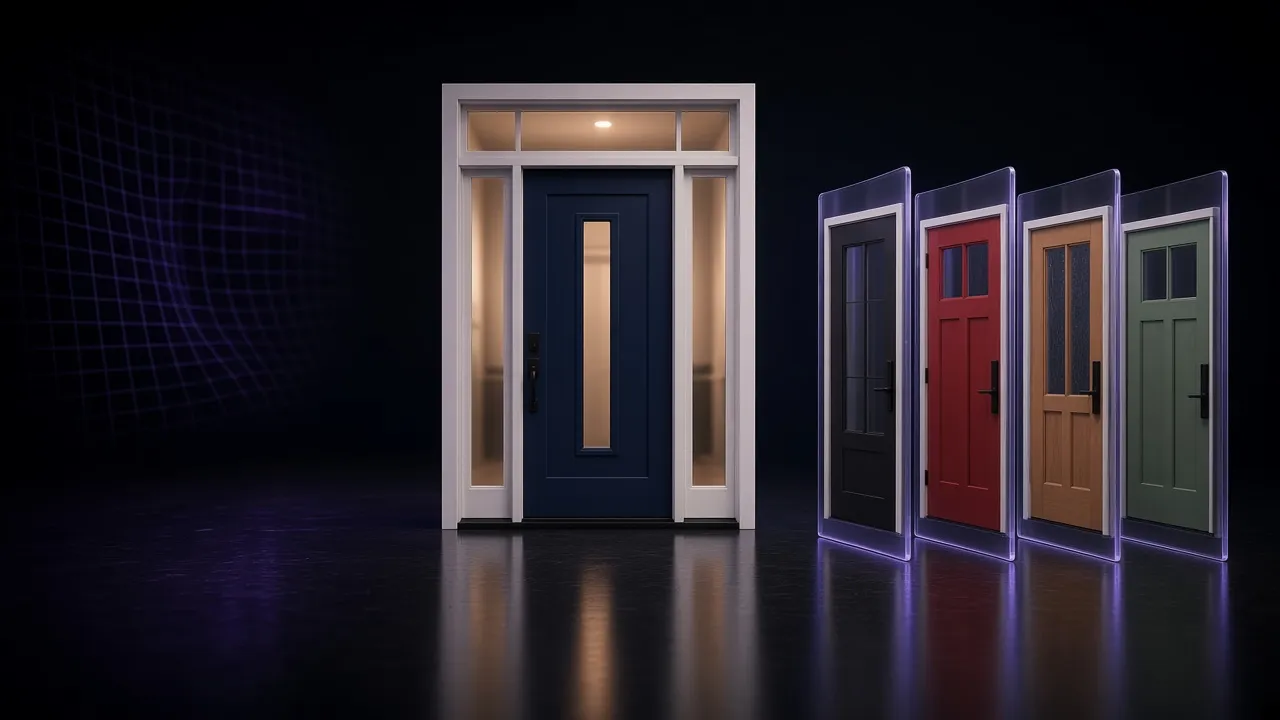
A front door is a small job with a big decision attached. It takes a day or two to install. It sits at the center of the house for the next twenty years. And most homeowners choose it from a picture.
This fall we spent some time looking at how that picture gets made: what homeowners are spending, what door makers already offer online, and where the process still runs on imagination. This post is what we found. We build product configurators, so we have a point of view, and we will get to it at the end.
The demand is real, and it is growing
In the 2025 Cost vs. Value Report, steel entry door replacement ranked second of 28 remodeling projects nationally. The average job cost $2,435 and added an estimated $5,270 at resale, a 216% return. Only garage door replacement ranked higher. In 2022, the same project returned 64%.
Homeowners are acting on it. In Houzz's latest renovation trends study, 17% of renovating homeowners replaced or upgraded an exterior door in 2025, and median spending on exterior doors rose 50% year over year, to $3,000. They have opinions about color, too. In the Houzz outdoor study, black (24%) and red (22%) led front door colors, ahead of white.
A $3,000 project with a visible return and a strong color opinion is exactly the kind of purchase where people want to see what they are getting.
A front door is a stack of decisions
"Front door" sounds like one product. It is closer to a system. First there is the layout of the entrance: a single door or a pair, one sidelite or two, with or without a transom. Door makers commonly list six basic layouts before style even comes into it. Then come the panel design, the material and grain, paint or stain, the glass and its privacy level, grilles, the handleset and its finish, and the swing.
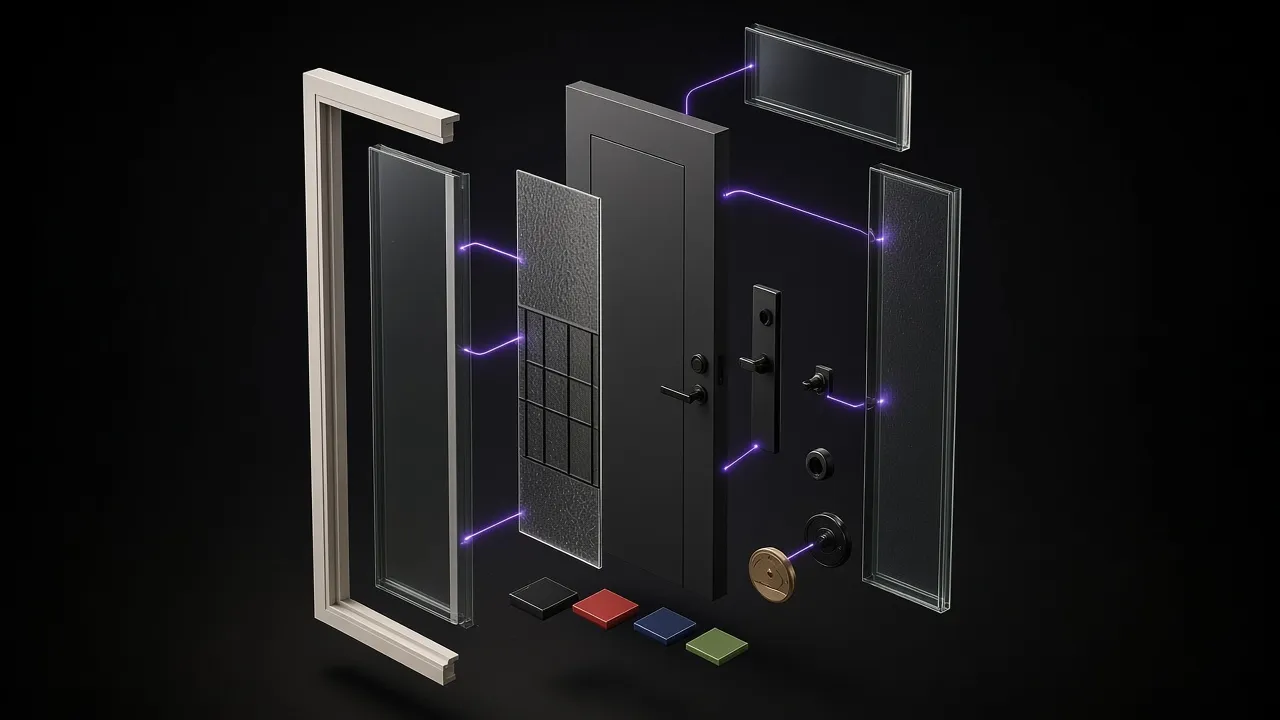
Multiply modestly. Six layouts, twelve colors, eight glass designs, four hardware finishes: 2,304 entrances by our own arithmetic, before panel style or size. Real catalogs go well past that. And several of those choices interact in ways a swatch cannot show: dark paint beside clear sidelites, seeded glass with warm light behind it at night, black hardware on a black door.
What the industry already does well
Door makers have not ignored this problem. The tools are better than many people assume.
- ProVia offers door and window configurators, a 2D visualizer where homeowners upload a photo of their house and mask where the door goes, and a 3D visualizer for pros. Each saved configuration comes with a Dealer Access Code to bring to a dealer.
- Masonite lets shoppers configure a door and view it in augmented reality through their phone camera.
- Therma-Tru walks homeowners through style questions and frames the result honestly, as an inspirational starting point for a conversation with a dealer.
- Catalogs such as Norandex's point to a home visualizer that ends with a printable summary for the contractor.
That last step matters. In every case, the online tool hands off to a person.
Where the picture stops
The handoff is where we kept finding gaps. For mid-size to large door and window replacements, HIRI's research puts about 75% of project spending on professional labor. Homeowners rarely buy a front door alone. They decide with a dealer, a contractor, and often a partner who was not there for the first browse.
So the same door usually passes through three pictures. There is the one the homeowner saved on their phone. There is the photo in the dealer's quote, which may show a standard color or layout rather than the one being quoted. And there is the shop drawing they sign before production.
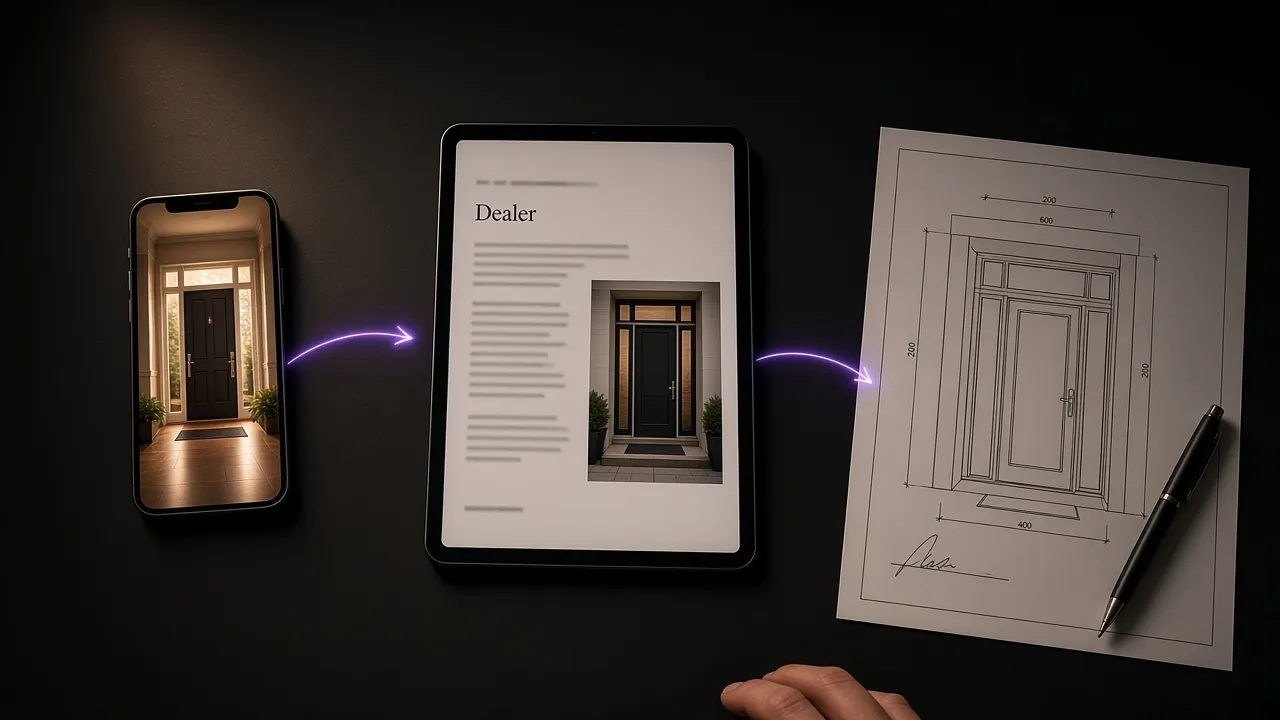
The last picture is the one that counts, and makers say so plainly. One iron door maker notes that its images are for inspiration, and custom orders should refer to the final CAD drawing. Another states that once a custom door is approved and in production, it is non-returnable and non-refundable. Those same terms put custom steel doors at 16 to 22 weeks of production, and a custom wood door maker quotes 8 to 14 weeks from drawing approval.
None of that is unreasonable. A custom door is built for one opening. But it means a homeowner signs a line drawing, waits two or three months, and sees the real combination for the first time on their own porch.
What we think helps
VisibleIO is a product configurator built from Blender renders. The idea is simple: show the exact combination, rendered from the maker's own 3D scene, before anyone signs.
For a door maker, it works like this:
- Build the entrance once. A 3D artist models the door system in Blender with the maker's real panels, glass, finishes, and hardware.
- Set the rules. In the VisibleIO CMS, the maker defines which combinations can actually be built: this glass only on that panel, this sidelite only with that frame. Combinations that cannot be built never appear.
- Render every valid combination. Each one is rendered from the cameras in the scene: a straight-on curb view, a three-quarter view from the walk, a close-up of the glass and handleset. The same entrance can also be rendered under more than one lighting setup, such as midday and dusk, which is when glass changes the most.
- Put it where the decision happens. One iframe embeds the Viewer on the maker's site or a dealer's. The homeowner, the dealer, and the partner look at the same link. Visitors can be allowed to export their configuration, so the exact choice travels with the quote.
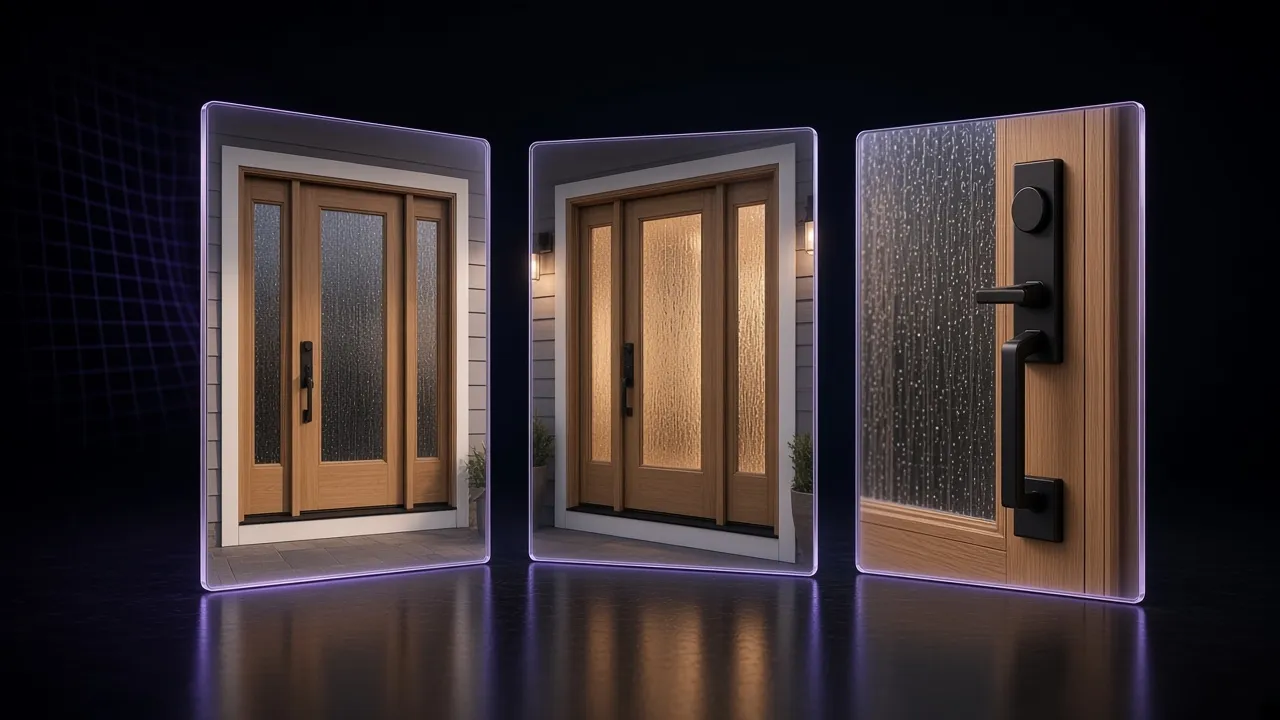
There are limits, and we would rather name them here. Shoppers switch between prepared renders; they do not spin a live model. VisibleIO does not place the door on a photo of your own house, so it sits alongside the visualizers makers already have rather than replacing them. And it does not replace measuring the opening or approving the shop drawing. What it changes is the picture people fall for. That picture becomes the door that will actually be built.
A quick test for door makers and dealers
Pick the combination you sell least, not because people dislike it, but because nobody can picture it. A dark stain with seeded glass. Double sidelites under a transom. Matte black hardware on a black door.
Do you have a photo of exactly that entrance, in daylight and at dusk?