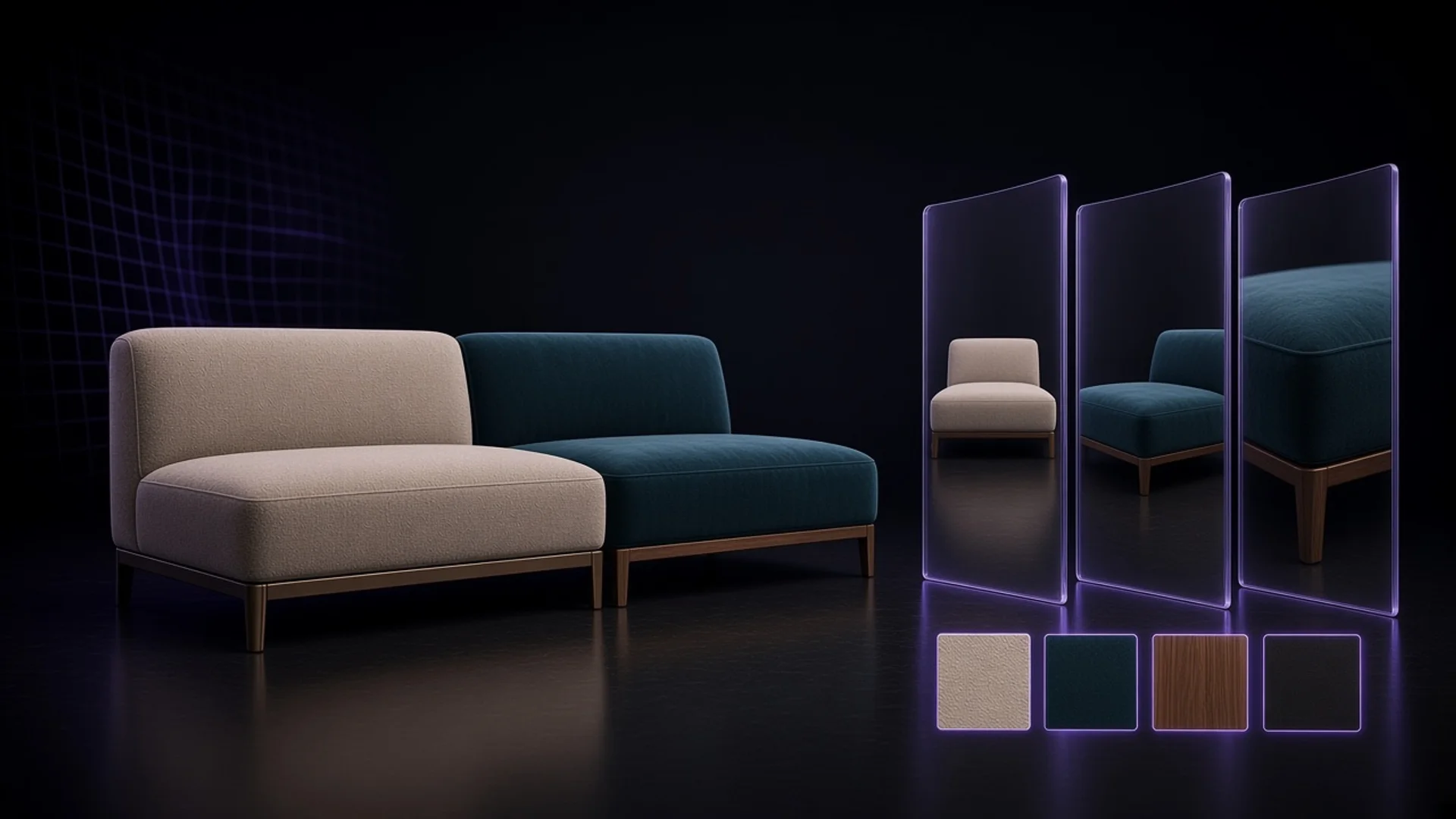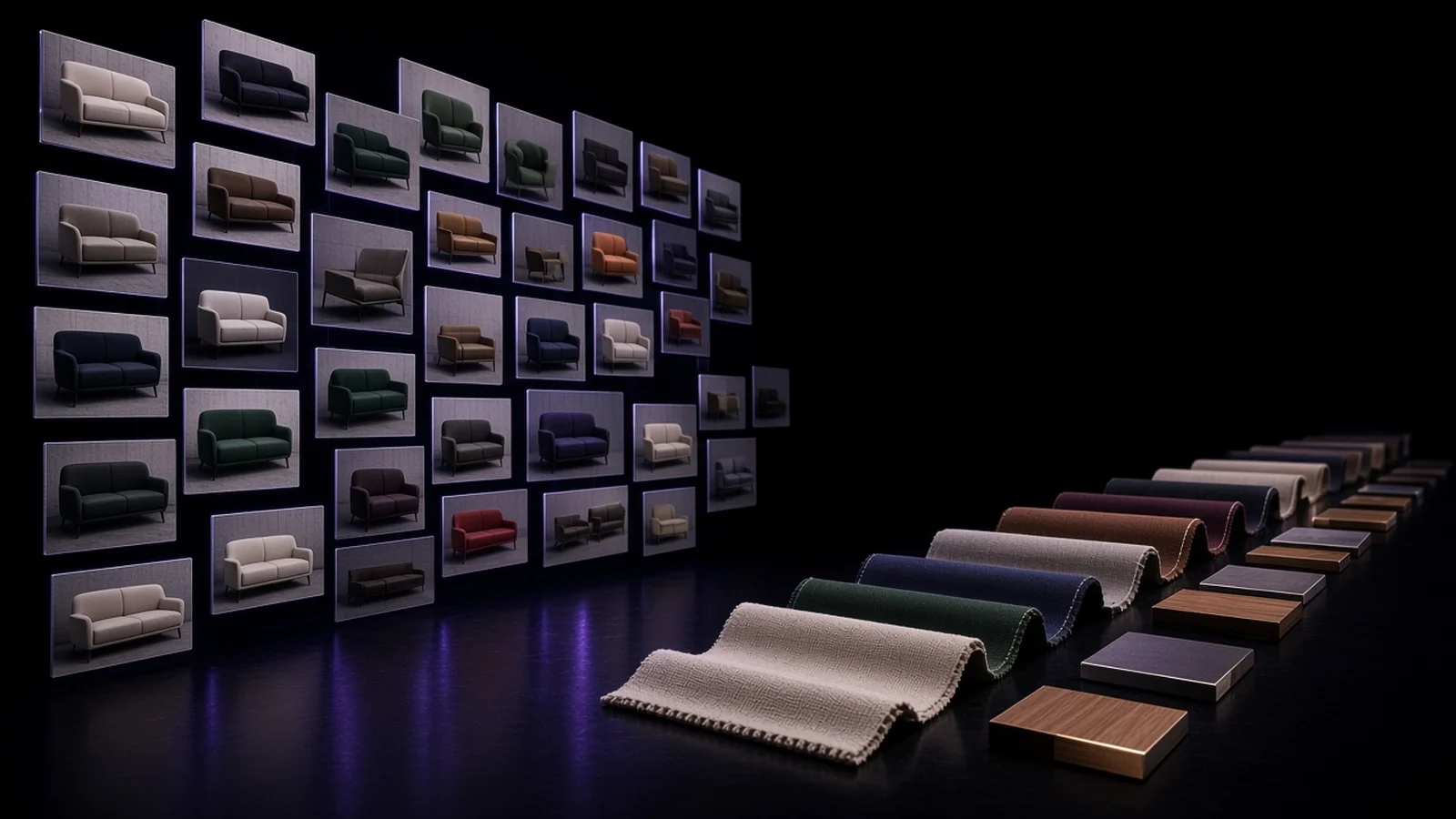
AI can draw the finish. It still can't hold the product.
A model can picture an option the factory will not build. A real-time configurator is a larger team than most brands have. Between those, one 3D artist can publish the options a brand actually sells, without a programmer in the path.
 VisibleIO Team4 min read
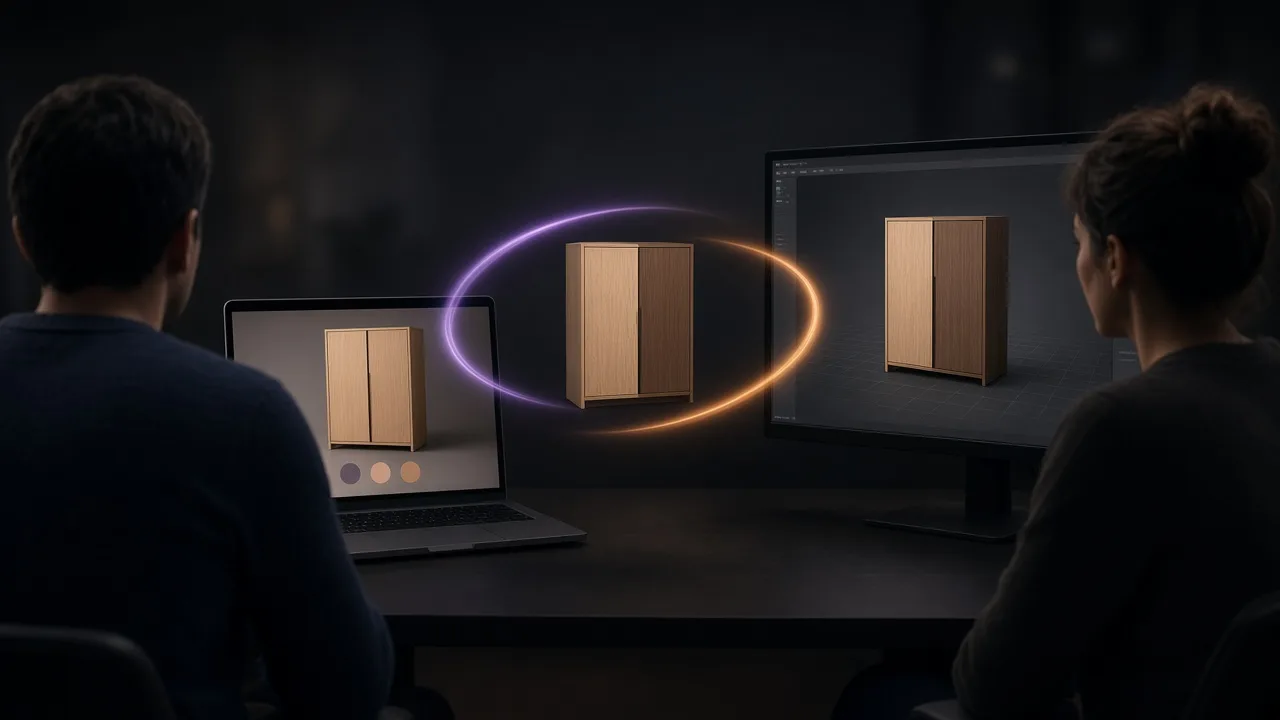
A brand owner sells a product that comes in real options. A 3D artist already knows how that product is built. A new finish sends them around the same loop. A generative model can now draw that finish. It still cannot hold which finishes are real.
One turn of the cycle
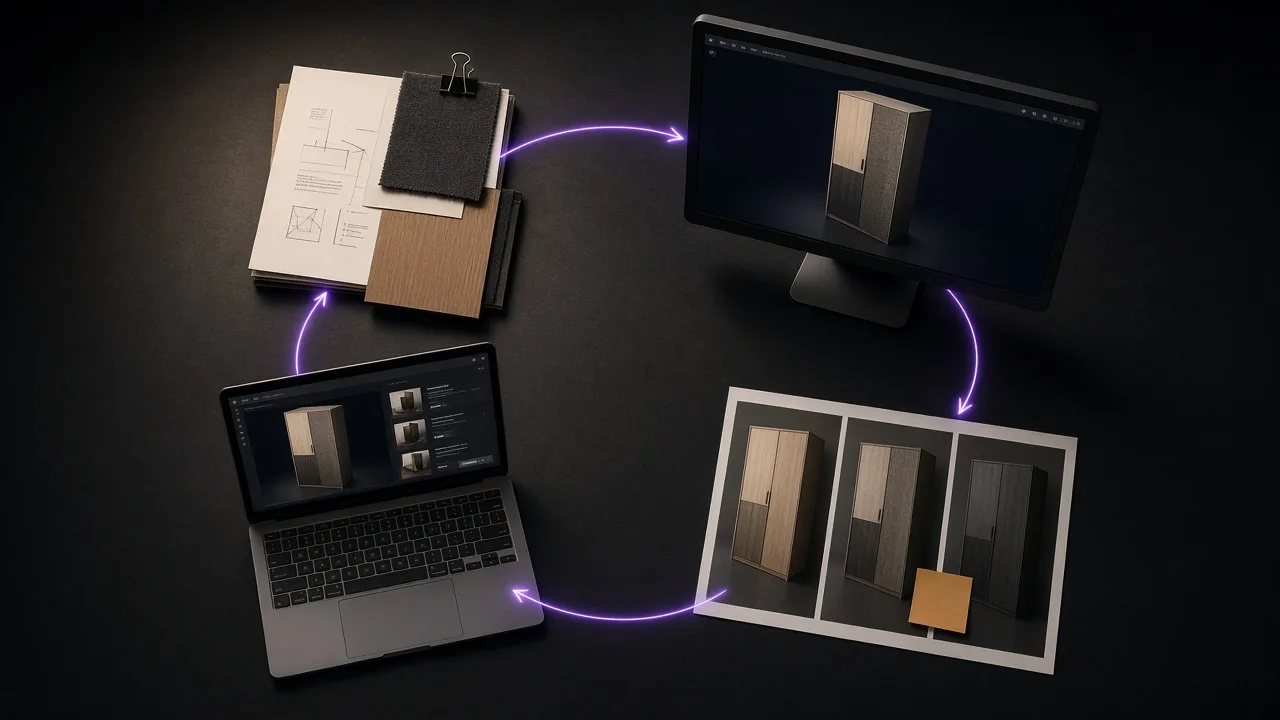
It starts with a brief. The brand names the product, the options it will actually ship, and where the picture will be used. The artist takes that into Blender. What comes back is a set of stills, and the stills are not the decision.
The brand has to look. The handle is last season's. This angle makes the wardrobe look deeper than it is. Walnut is not a finish the factory will build. Those notes go back to the artist, the only person who can change the scene without inventing a product. If the stills pass, someone publishes them and tells the site which file belongs to which option. Four finishes can be paired by hand. A wardrobe with frames, doors, and handles, where only some combinations are real, cannot. Publish is not the end. A campaign wants a new camera, the factory drops a fabric, a bestseller needs a taller door, and the brief opens again.
The photo is doing the showroom's job
Each turn carries more weight than it used to. Statista estimates global furniture e-commerce at about USD 256 billion in 2025, with about USD 121 billion in the United States. On those sites there is no sample to touch. The photograph is the showroom.
The National Retail Federation and Happy Returns estimate that 19.3% of online sales will be returned in 2025, inside a US retail total of USD 849.9 billion. That figure is all of retail, not furniture, and it does not measure bad images. Those retailers also said that selling more online and cutting returns are both priorities for 2026. A configurable product has more ways to miss than a fixed one, because the shopper is choosing a finish they have not stood next to.
A picture is not a product rule
A brand can ask a model for this wardrobe, in sage, in morning light, and get something plausible before lunch. At this stage that is as far as it goes. The model does not keep the rule underneath the picture: which door fits that frame, which finish the factory will build, which of those the shopper is allowed to buy. A mood board can use the picture. A product page cannot, because the page has to sell a combination that exists.
The check on those images is thin. In McKinsey's State of AI survey, 27% of respondents at organizations that use generative AI said employees review all of that output before a customer sees it, including an image used in marketing. A similar share said 20% or less is checked. So the folder fills up with pictures that look finished and still cannot be offered.
The other door is a real-time configurator, the kind built and kept like an industrial system. The shopper can orbit the product, and a team has to make every combination hold together. For a brand whose problem is a complex catalog and no engineering bench, that stack is the wrong size. The cost is not only the license. It is the people who have to stay on it.
The middle path
VisibleIO is the compromise we built between those two.
One 3D artist stays in Blender. They build the scene and set the options and rules in the brand's workspace. We render the combinations the brand says it sells, from the cameras and the lighting already in the scene. Shoppers switch those options and cameras. They do not orbit a live model. That limit is the point: the page shows prepared renders of real combinations, not a new product invented in the browser.
Getting it onto the site is not a development job. On an ordinary site it is one iframe. On Shopify, the app puts the same Viewer on the product page and keeps the shopper's choice with the order. The artist and the brand do not need a programmer between the scene and the page.
The brand owns the workspace and pays for the plan. Each product is its own project. The brand invites the artist in, and the work happens there instead of in a thread of renamed files. When the job ends, the artist can leave. The scene, the configurator, and the viewer stay with the brand.
If the artist is not on staff
We expect a lot of this work to be freelance, and hired per product. A brand without an in-house artist does not need a new department. It needs the person whose presentation fits that piece, including someone in another city or another time zone. The brief and the review still happen. The workspace is what makes the distance workable: the artist joins the brand's project, does the scene, and the project does not leave when the contract does.
This does not hire the artist, and it does not design the product. It also does not, on its own, cut a return rate. A correct picture can still be a sofa the shopper does not want once it is in the room. What it removes is the unused picture, and the engineering project that was too large for the catalog.
If this is how you already want to work, the useful question is which product is still a folder. Tell us how the handoff works today.