The Configurator Gap: Why We Built VisibleIO
Brands sell products with hundreds of combinations. Shoppers still get one photo and a color dropdown. Here is the gap we kept running into as 3D artists, and why we built VisibleIO to close it.
 VisibleIO Team3 min read
We didn't start VisibleIO as a software company. We started as 3D artists, rendering furniture, fixtures, and products for brands in Blender. The work was good. The way it reached shoppers was not.
One product, thousands of versions
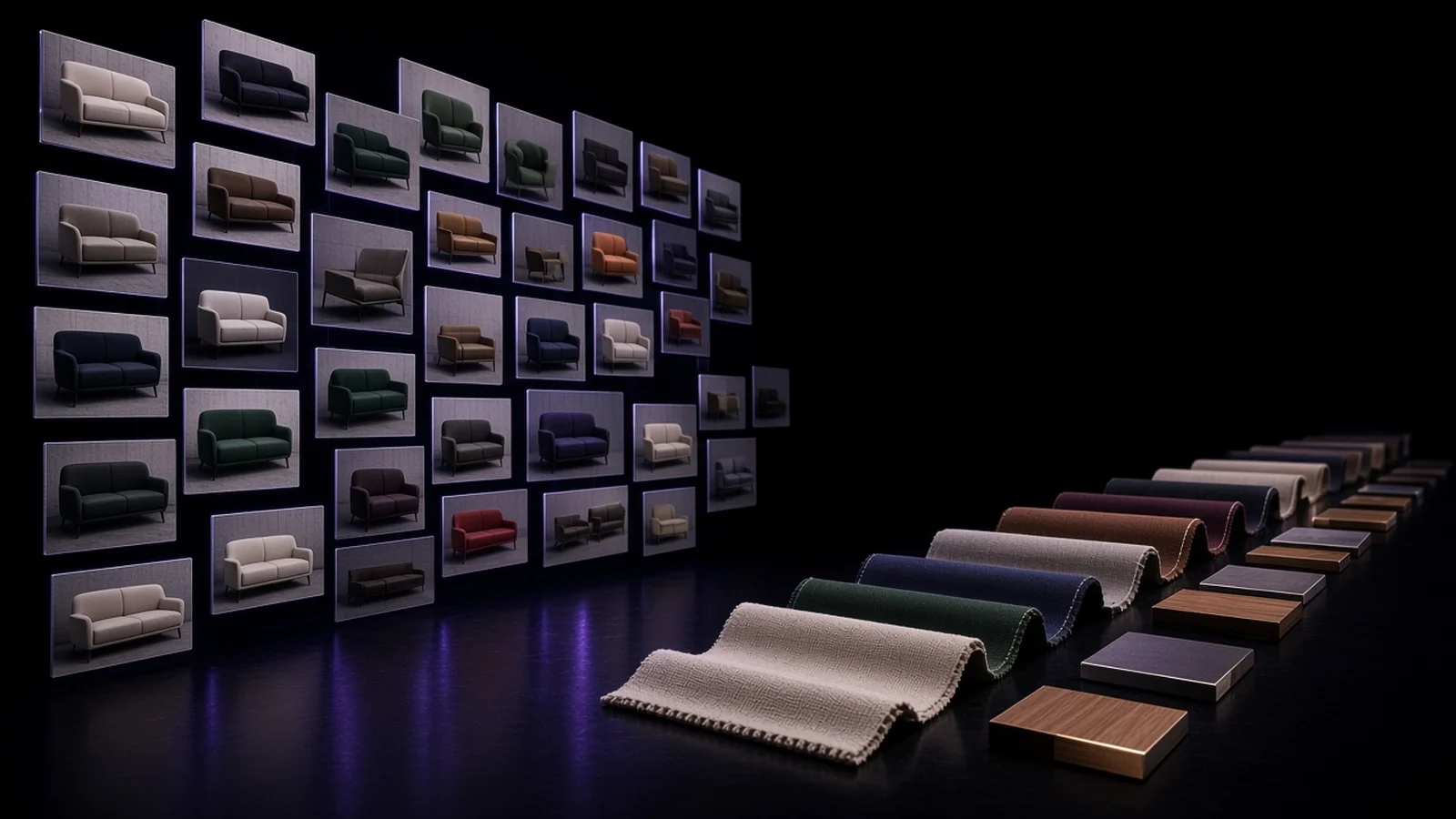
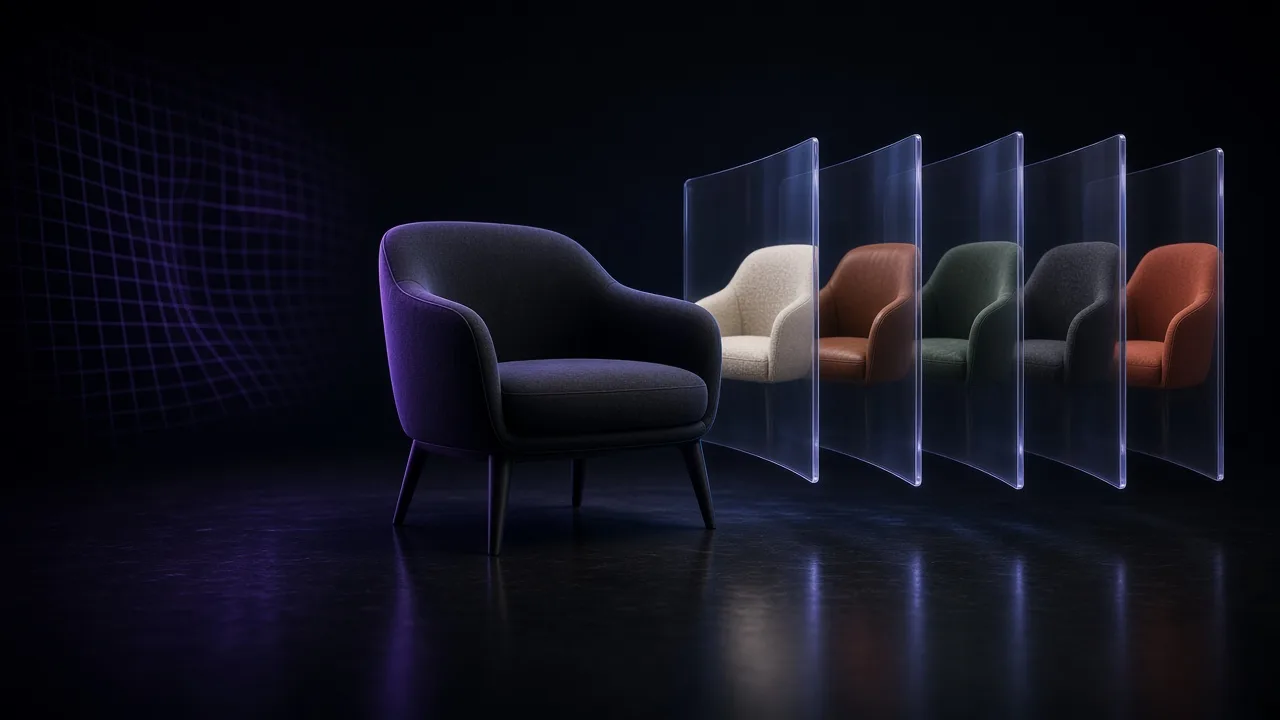
Configurable products are the norm, not the exception. A sofa comes in several fabrics, leg finishes, and sizes. A wardrobe has frames, doors, and handles. Multiply the options and a single product line turns into hundreds or thousands of valid versions.
On most product pages, the shopper still sees one hero photo and a dropdown that says "Color: Sage". They are asked to imagine the rest. That is a lot to ask from someone about to spend real money on something they will live with for years.
The brand feels it too. Questions pile up in support, samples get shipped back and forth, and some orders arrive looking different from what the customer pictured.

When every option is another file
The moment it became obvious was a furniture project whose combinations outgrew a folder of stills. Rendering was not the hard part; Blender handles that. Managing it was. Every file had to be named, checked, uploaded, and matched to the right option on the website. Changing one fabric meant redoing a whole slice of the set.
Still images grow with every option you add. A catalog that adds one more finish does not feel bigger to the brand, but it can double the work behind it. That math breaks long before the catalog does.
Two shortcuts, both broken
When we looked for a better way, the industry offered two answers.
- Real-time 3D in the browser. Rebuild the product as a lightweight GLB and let the browser draw it. You get free rotation, but you trade away the lighting, materials, and detail you built in Blender. A different specialist rebuilds the scene, and it has to stay light enough for a phone.
- AI-generated product images. Fast and cheap, but the pixels are a guess. When a shopper is choosing a walnut veneer or a specific brass finish, a guess is not good enough. The image has to match what ships.
Neither answer respected the work artists already do, and neither gave brands a promise that the picture is the product.
What the market actually needs
Every time we wrote down what a configurator should do, the list came back the same:
- The image comes from the real product scene, not a rebuild or a prompt.
- Only valid combinations are possible. If oak doors don't fit the glass frame, the shopper never sees that option.
- It loads quickly on a phone, inside the page the brand already sells on.
- The artist stays in Blender, and the brand doesn't need a web engineer.
How VisibleIO answers it
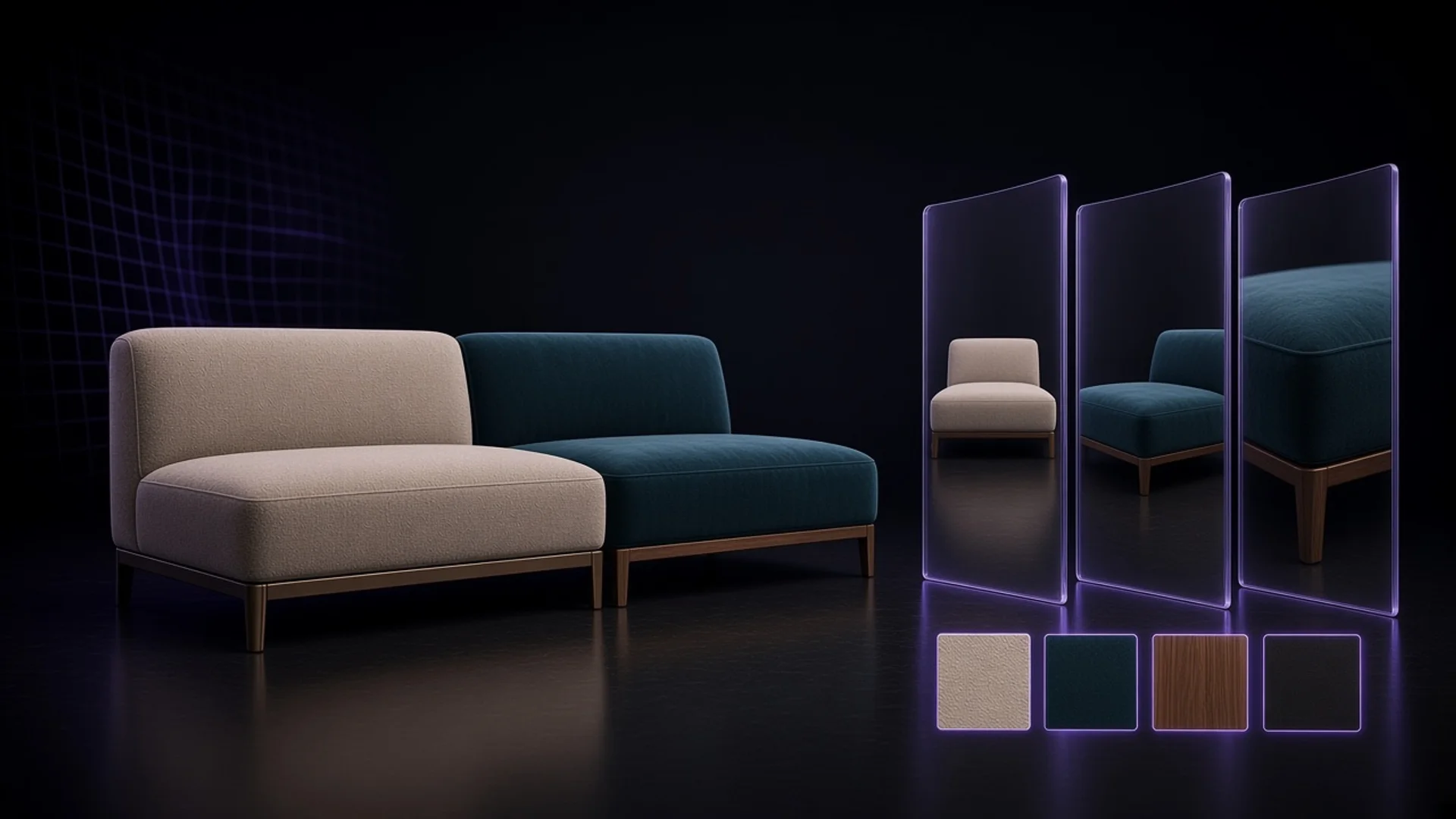
VisibleIO is a Blender add-on, a cloud CMS, and a browser Viewer. You set the options and rules in the CMS. VisibleIO renders each valid configuration from the cameras and lighting you already built. Then you paste one iframe on the website. On Shopify, our app puts it on the product page and saves the shopper's choice with the order.
We made one honest trade-off. Shoppers switch between the views you prepared; they can't freely rotate the model. In exchange, every view looks exactly like your Blender scene, because it is your Blender scene.
The picture should be the product. Not a rebuild of it, and not a guess at it.
VisibleIO Team
Who it is for
For 3D artists, it turns a scene you already have into a configurator you can offer as a service. The client owns the workspace and pays to host it; you charge for the creative work.
For brand owners, it is the shortest path from "we have a Blender file" to "shoppers can see the finishes you sell on the product page".
If that sounds like a problem you have, see the plans and start at USD 0, or tell us about your products.